

Are you an Early Intervention therapist interested in adopting the bagless therapy approach? Keep reading to learn more about the benefits of this approach, some tips to help you succeed, and two resources that makes implementing the bagless therapy approach a breeze.
What is “Bagless Therapy”?
An item that is often synonymous with the paediatric Speech and Language Therapist is the therapy/toy bag – so much so that McWilliam (2010) called the toy bag the “icon of the Early Intervention home visitor” (pg.160). Typically, a therapist’s toy bag is full of motivating toys that are considered beneficial for a child’s development (cognition, language, etc.). It may also include a variety of other useful and motivating items that the therapist deems necessary (bubbles, wind-up toys, balls, etc.). However, recently, Early Intervention providers have begun to embrace the “bagless” therapy approach. This involves using materials available in the home environment, as opposed to taking a toy bag. Therapists can demonstrate how to use familiar items as toys, or can coach parents/caregivers how to use language facilitation strategies in daily routines.
Why Should You Ditch the Toy Bag?
We know that coaching parents/caregivers to use language facilitation strategies during daily routines is an effective therapy approach. However, sometimes (for a variety of reasons) a play-based approach is chosen. When this happens, the therapist tends to take their own toy bag to the sessions, particularly if the family doesn’t have many common toys at home.
Typically (although it’s not always the case), therapists who take toy bags into homes tend to deliver direct intervention with the child; interacting directly with the child and playing with the toys, as opposed to coaching parents/caregivers to use strategies (McWilliam, 2010). Occasionally, parents/caregivers will be involved in the sessions, and a coaching approach may be used. But, usually at the end of the visit, the toys are packed back into the bag and taken away. Although the use of the toy bag in this way in home visits is not “bad”, it may be counterintuitive. If toys are taken away at the end of the session, then the family is unable to use the same materials in between visits. Some parents/caregivers find it difficult to replicate the strategies demonstrated by the therapist when using their own toys, so practice is limited. Additionally, taking the toy bag and a selection of toys can inadvertently imply to the family that their toys are “not good enough” to help the child’s development, and suggest that it is the toys and the contents of the bag that make the difference, not the strategies and approach (Crawford and Weber, 2014).
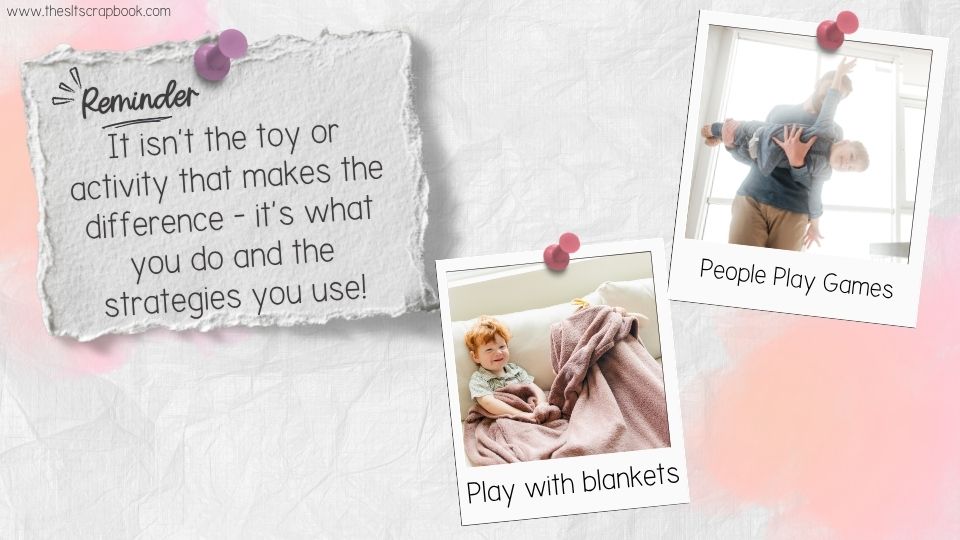
This is why the bagless therapy approach is useful. By not taking a toy bag to the session, it encourages therapists to adopt the coaching approach, and helps to show families that it isn’t the toy or activity that makes the difference, it’s them and the strategies they’re using.
Benefits of Going “bagless” in Early Intervention
Here are four benefits of going bagless in your Early Intervention therapy sessions…
- Save Money: When you use toys the family already has at home, or you integrate strategies into their everyday routines, there’s no need to buy your own therapy toys and materials.
- Improve Carryover: When you’re bagless, you support caregivers to practise skills and strategies using things the family already has at home. This makes home practice easier and more likely, because the caregivers have practised what to do and how to do it during the sessions.
- Improve Caregiver Confidence: When you use toys the family already have available at home, or implement strategies in their daily routines, caregivers learn that it isn’t the toy or activity that makes the difference, it’s them and the strategies they’re using. This helps to improve their confidence in knowing that they are making a positive difference to their child’s development.
- Save Time: When you’re bagless, there’s less preparation required before a session; you don’t need to plan which toys to take or activities to do in your sessions. Instead, you use what the family have available and get involved in their routines, and you plan with the caregivers in the sessions. It also saves time after your sessions, because you don’t need to spend time sanitising toys.
Top Tips for Ditching the Toy Bag
- Focus on Functional Goals: Align therapy goals with the child’s daily routines and interactions. Instead of bringing external toys or materials, use what is naturally occurring in the child’s environment to work on these goals.
- Plan with Flexibility: Prepare for sessions by having a flexible plan that can adapt to the child’s interest and energy levels on a given day.
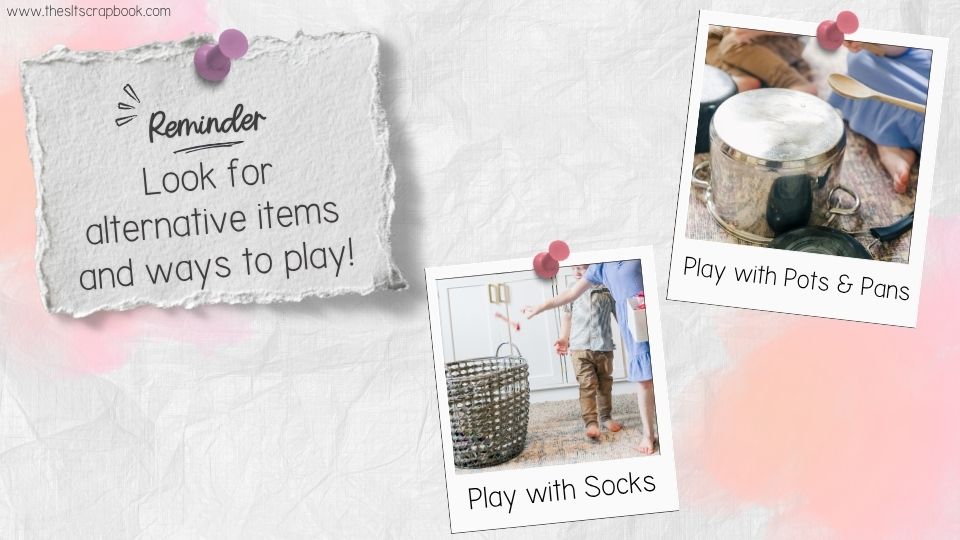
- Encourage Playfulness: Encourage playfulness in daily routines. You don’t need toys to play; show caregivers how they can play with household objects, or without any toys/objects, during routines, while still addressing goals. Learn more about encouraging playfulness in Daily Routines here.
- Stop Buying Toys: One way to embrace the bagless approach is to stop buying toys! This might feel difficult at first, as we always see the multitude of ways we can use toys in therapy. But remember that it’s not the toy that makes the difference; it’s the strategies. Consider too, that if the family doesn’t have the same toy as you, will carryover happen in the same way between sessions?
- Look for Alternative Items: Instead of taking toys, can you think of similar everyday items that can be used instead. For example, instead of taking balls, can you use balled up socks? Instead of taking blocks, could you use empty food containers with lids? Check out this blog post for more ideas about using everyday items as toys.
Implementing the Bagless Therapy Approach – Play Ideas for Everyday Items
If you’re hesitant to take the leap to going bagless in your Early Intervention sessions, this resource has been specially designed to help therapists embrace bagless therapy, while still following a play-based therapy approach:

These handouts have been designed to help you embrace bagless therapy and leave the toy bag in the car, and instead show families how they can effectively support their child’s development with things they have at home.
There are 80 play-based ideas included, covering a range of skills. They are caregiver-friendly and easy-to-understand. Perfect for your Early Intervention sessions.
If you want to learn more about implementing the coaching approach in your sessions, and want more tips and ideas for using strategies in both play-based and routines-based interventions, check out the Early Intervention Handbook.
Alternatively, check out our round-up of Caregiver Coaching posts here.
I hope you’ve found this helpful – have you tried going bagless in your Early Intervention sessions? Share your tips and advice in the comments!
References:
Crawford, M.J., and Weber, B. (2014). ‘Early Intervention Every Day: Embedding Activities in Daily Routines for Young Children and Their Families’. Paul H Brookes Publishing Co., Baltimore, MD.
McWilliam, R.A. (2010) ‘Routines-Based Early Intervention: Supporting Young Children and Their Families’. Paul H Brookes Publishing Co., Baltimore, MD