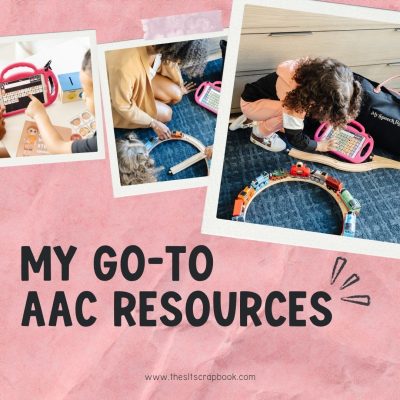
Learning to support children who use AAC can feel overwhelming, especially with so many tools, terms, and strategies out there! Whether you’re just starting to explore augmentative and alternative communication (AAC) or looking to deepen your clinical skills, having trusted, evidence-based resources is key. In this post, I’m sharing my go-to AAC resources specifically for SLPs – tools that have helped me grow in confidence, stay current with best practices, and better support children and their caregivers to implement AAC through play-based therapy and routines-based intervention.
Please Note: This post contains affiliate links. This means I earn a small amount of commission if you purchase any of the courses or resources listed in this post. Despite this, I only ever share and recommend things I have personally used and truly believe will help you and your clients. Thank you for supporting my website in this way.
A note about Amazon links: Please be aware, the links are set up to redirect to your local Amazon site. This means, if some books/resources are not available in your country, you will be redirected to a product with a similar title. Please double-check before purchasing, as you may not be getting the resource I mentioned in the post.
My Go-To Courses for AAC
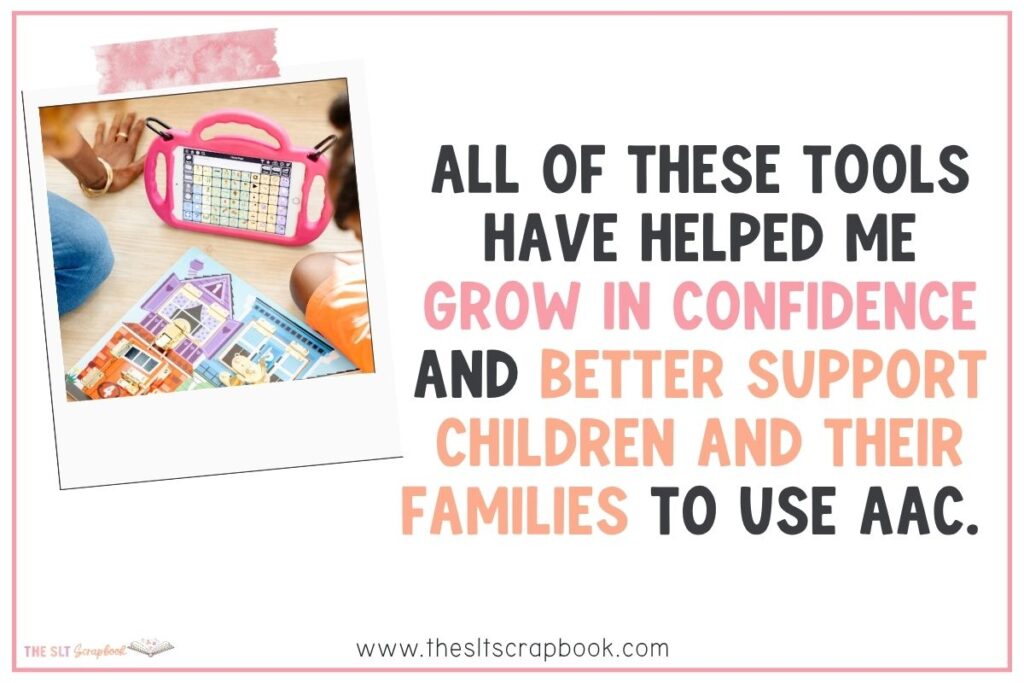
These are my go-to courses for learning more about AAC. They’ve helped me deepen my clinical skills, stay current with best practices, and feel more confident supporting AAC users and their families through early intervention…
AAC Ally: Treatment (affiliate link)– This course by Rachel Madel covers foundational knowledge and strategies to help you start implementing AAC effectively in your sessions. It is full of strategies, activity ideas, tips and more to help you confidently implement AAC in your sessions.
AAC Ally: Assessment (affiliate link) – This course by Rachel Madel is ideal if you’re struggling to know where to start with AAC. It covers the step by step process that Rachel Madel (SLP, course creator) uses when choosing AAC systems and targets.
AAC for Toddlers and Preschoolers (affiliate link) – This course by Early and Bright and Lauren Greenlief (Inspire Connections Therapy) was created to support AAC implementation with toddlers and preschoolers. It covers various AAC options, recommendations, evaluation templates, strategies, coaching, and so much more. Great if you’re working in Early Intervention!
Lite-Tech AAC Workshop (affiliate link) – This is another course by Early and Bright and Lauren Greenlief (Inspire Connections Therapy) and goes into more detail about lite-tech options, including how to implement these supports as part of a child’s AAC system.
My Go-To Websites about AAC
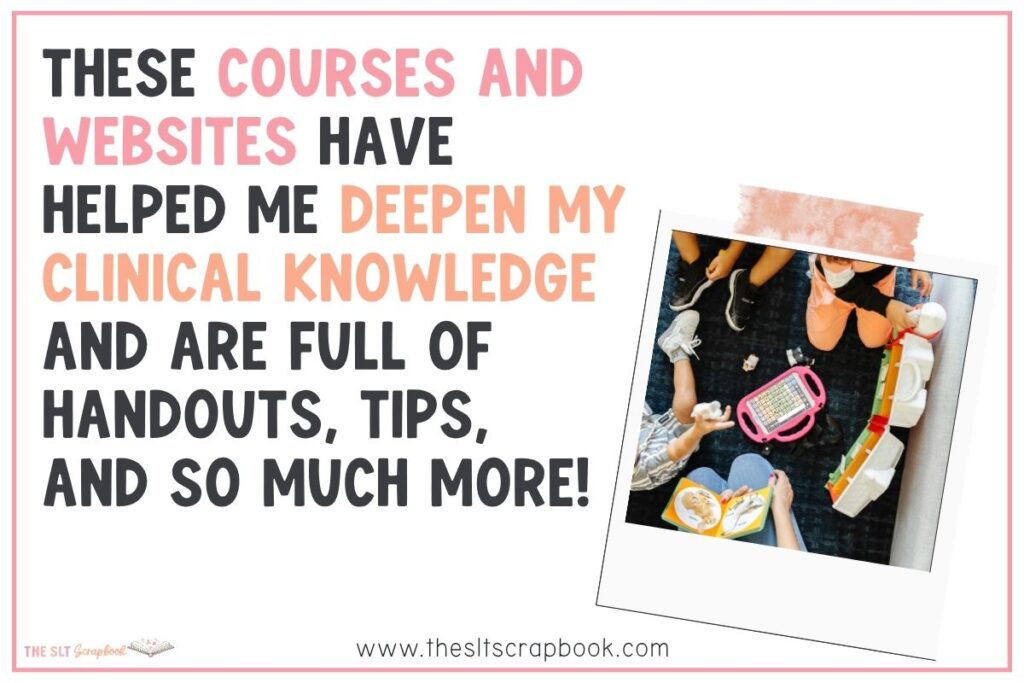
These are my go-to websites for reliable, up-to-date AAC information. They’re packed with practical tips, downloadable tools, and research-based guidance that I often revisit to support my own learning and clinical decision-making…
The Ace Centre is full of resources and information all about AAC. It includes handouts for various topics, including getting started with core words, modelling, and so much more! They also provide a variety of on-demand learning courses all about AAC too, which is great if you want to upskill!
The Tobii Dynavox site has a variety of resources and information all about AAC. They also have a Learning Hub with on-demand and live webinars available for you to learn more (you need to have an account to access these courses). They also have communication boards and other resources available on the site.
AssistiveWare (creators of Proloquo and Proloquo2Go, amongst others) have a range of resources and tips on their site. Including communication boards, tips for setting up AAC, and so much more. Plus, their apps are 50% off 8th-15th October 2025 for AAC Awareness Month!
PrAACtical AAC is a treasure-trove of advice, tips, strategies, and so much more all about AAC!
AAC Language Lab has a range of resources and information available on the site. It is a subscription-based site (I’m not subscribed), but they have a tonne of free materials available for you to use!
PRC-Saltillo a range of trainings and resources available on the site.
AAC Scotland has a range of free training modules, resources, handouts and more available on the site.
Project Core is bursting with materials, training videos, resources and more to help you implement Universal Core Vocabulary in classrooms and daily routines.
Renfrew Education- Core Word Curriculum – this site has a huge catalogue of ideas and materials for teaching various core words and AAC.
AssistiveWare Core Word Classroom – this site (free account required) is full of printable core word displays, teaching plans, therapy ideas, resources and tips for teaching core words each week. It is a treasure-trove of information!!
My Go-To Children’s Books about AAC
Having children’s books about AAC on hand is a great way to introduce the topic to young learners and model acceptance, inclusion, and communication diversity in a natural, engaging way. Here are some of my favourite children’s books about AAC…
Mission Inclusion: Sy & You by Megan Craft (Amazon affiliate link) – In this book, we spend the morning with Sy on his first day back at school. It shows the different ways that Sy uses his device to communicate throughout the school day.
I Talk in Different Ways by Amanda Hartmann (Amazon affiliate link) – This book explores the many different ways a young AAC user communicates with others. It’s a great way to introduce AAC to children. I love sharing it with classroom teachers to read aloud when we’re introducing AAC to a new student.
AAC Rhyme time by Amanda Hartmann (Amazon affiliate link) – This fun book is full of rhymes all about AAC. It’s another great book to share with class teachers when introducing AAC!
AAC Alphabet Adventures by Amanda Hartmann (Amazon affiliate link) – This delightful book explores how children who use AAC discover the letters of the alphabet. It’s another favourite of mine to share with class teachers when we are introducing AAC.
All of these books have been written by SLPs. If you want to see more about my favourite books written by SLPs, check out this blog post.
My Go-To Books for Professional Development & AAC
These are my go-to books for professionals looking to build their knowledge and confidence in AAC. They’re practical, evidence-based, and packed with strategies that are easy to apply in a range of settings…
NASEN Spotlight: AAC and Aided Language in the Classroom by Katy Leckenby and Meaghan Ebbage-Taylor (Amazon affiliate link) – This easy-to-read book is full of guidance and support to help teachers and therapists successfully implement AAC in the classroom. It covers current evidence-based practice, myths and misconceptions about AAC, practical strategies, and so much more!
Who’s Afraid of AAC?: The UK Guide to Augmentative and Alternative Communication by Alison Battye (Amazon affiliate link) – This comprehensive guide is a must-have for therapists and teachers supporting children with non-verbal communication. It covers the different types of AAC, best practice, tools and tips, and has sections for home, Early Years, primary, secondary, and special schools, and so much more! It is UK-centric, but much of the information is applicable worldwide.
All of these AAC resources have been incredibly helpful in my own therapy practice. I hope this list gives you useful tools and fresh ideas as you continue building your AAC knowledge and confidence in therapy. Do you have any go-to resources you’d add? Let me know in the comments!