Communication Temptations in Speech and Language Therapy
Support early language development through simple, effective interaction strategies.
Communication Temptations is a commonly used strategy in Early Intervention. By creating opportunities for children to initiate, request, and respond, we can support meaningful communication within everyday routines and play.
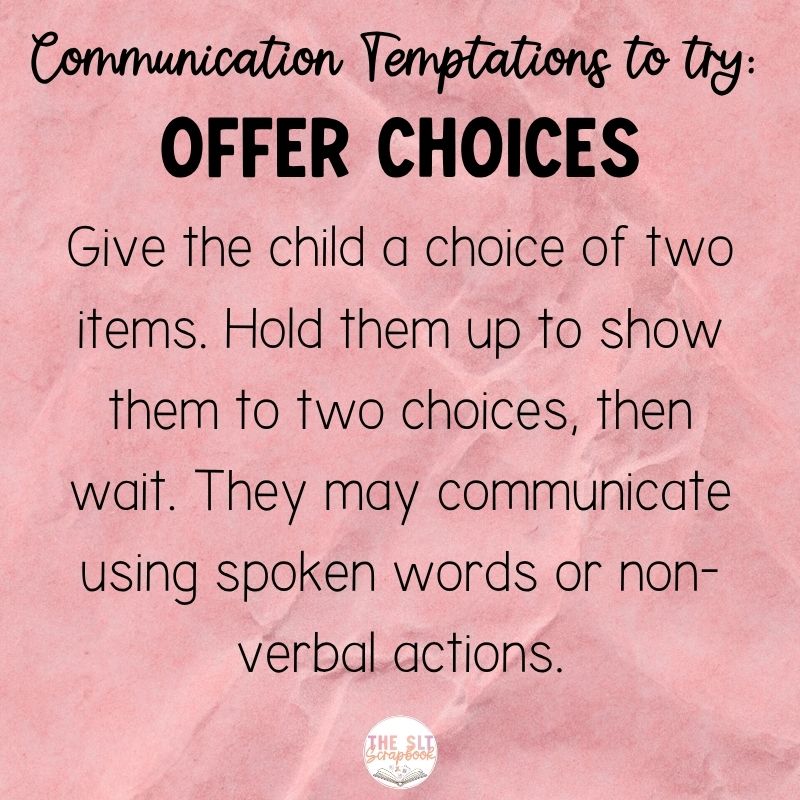
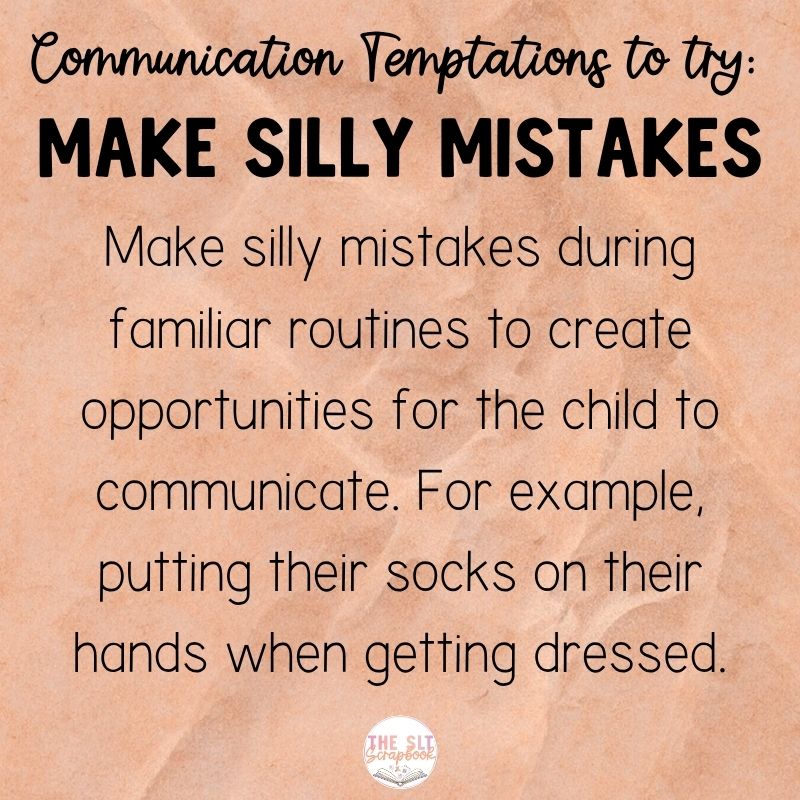
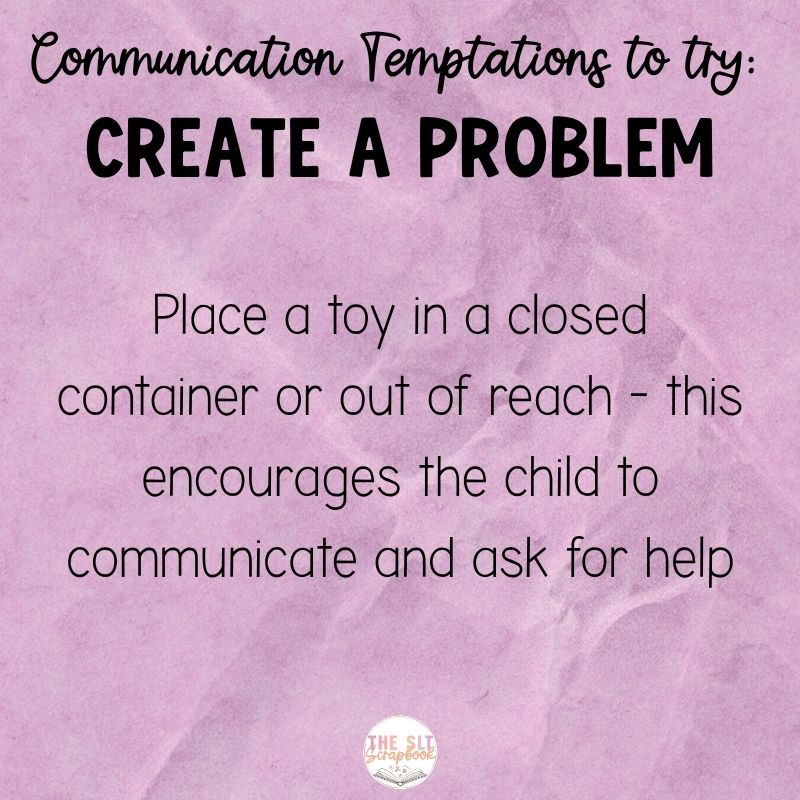
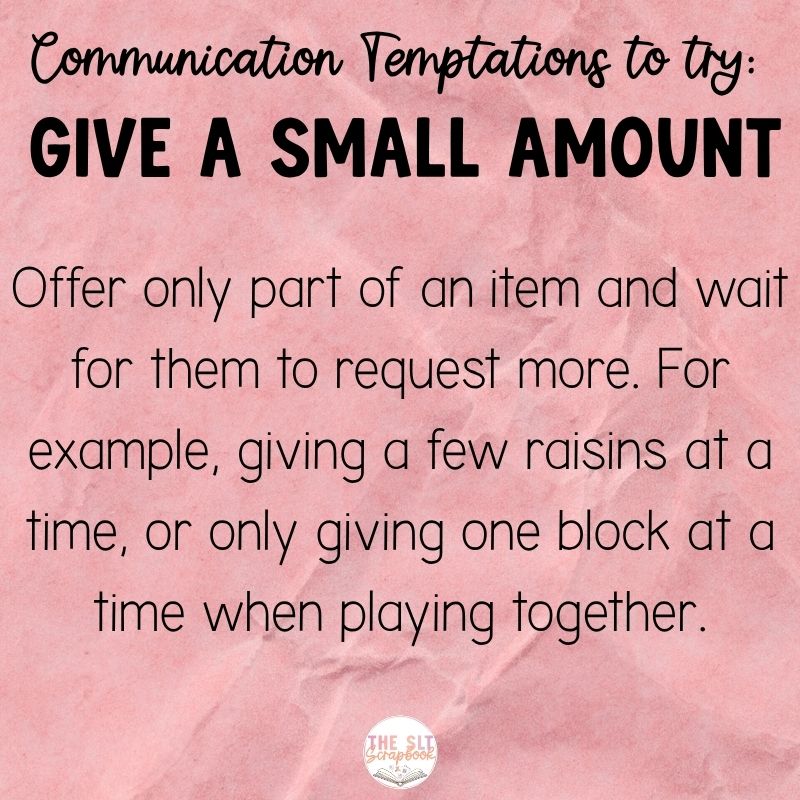
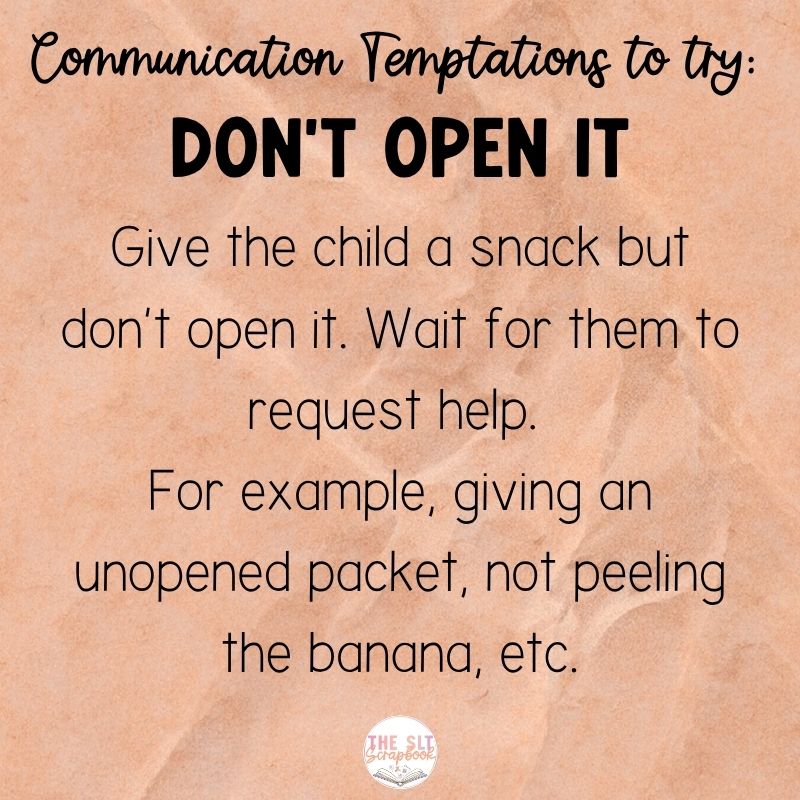
Communication temptations are small, intentional changes we make to the environment or interaction to encourage a child to communicate. Rather than prompting directly, we create a situation where communication becomes meaningful and necessary.
They can be easily introduced during caregiver coaching sessions, whether following play-based or routine-based approaches.
Communication Temptation FAQs
What are Communication Temptations in Speech Therapy?
Communication Temptations is a strategy where you structure or manipulate the environment in such a way that the child has the opportunity to use spontaneous communication with another person, in order to get a desired item/result.
Communication Temptations come under the umbrella term ‘Environmental Arrangement’. Environmental Arrangement refers to the way we set up the child’s physical and social environment to encourage communication and interaction (i.e., they create communication opportunities) (Brillault-Kenny and King, 2023).
When should I use Communication Temptations?
You can use communication temptations during play, daily routines, and everyday interactions. They work best when embedded naturally into activities the child already enjoys.
Are Communication Temptations suitable for late talkers?
Yes. Communication Temptations are widely used in Early Intervention to support late talkers, helping them initiate communication, request, and engage more actively.
Communication Temptations is a General Language Facilitation/Stimulation technique. General language stimulation involves making changes to the physical and linguistic environments in order to increase the opportunities for the child to hear developmentally appropriate language. Research (Buschmann et al., 2009, and colleagues, cited by Finestack and Fay, 2013, in Rescorla and Dale, 2013) has shown that there is strong evidence to support the use of general language stimulation techniques with late talkers.
How can I use Communication Temptations in caregiver coaching sessions?
During caregiver coaching sessions, you can work with the parent/caregiver to identify suitable opportunities for using Communication Temptations. This may be during play or daily routines. Encourage the parent/caregiver to take the lead and to choose those that will work best for their child/family/routines; this helps to support carryover between sessions. Then, coach the parent/caregiver to use the strategy effectively while they interact with their child.
Can parents use Communication Temptations at home?
Absolutely. These strategies are simple, flexible, and designed to fit into real-life routines like playtime, mealtimes, and daily activities.
Why use Communication Temptations in Speech Therapy?
Communication temptations help children:
Initiate communication independently
Communicate with purpose
Stay engaged in interaction
Build confidence in communication
They also support caregivers to recognise and respond to communication opportunities in everyday routines.
Using Communciation Temptations in Caregiver Coaching
During caregiver coaching sessions, you can work with the parent/caregiver to identify suitable opportunities for using Communication Temptations. This may be during play, daily routines, or a mix of both.
Top Tip: Encourage the parent/caregiver to take the lead and to choose the Communication Temptations that will work best for their child/family/routines; this helps to support carryover between sessions because they have taken ownership of the strategies.
You can then coach caregivers to use Communication Temptations with their child during the session. Be sure to provide opportunities for problem solving and reflection in your coaching sessions. This helps move beyond therapist-led sessions and supports carryover between sessions.
Ready to feel confident in your Early Intervention sessions?
Join my email list for weekly tips and ideas for Early Intervention, plus get access to my EI Starter Kit full of materials to support your practice.
You’ll get practical strategies you can use in your sessions, evidence-based approaches explained clearly, and resources that make your job easier – not harder.
We use cookies on our website to give you the most relevant experience by remembering your preferences and repeat visits. By clicking “Accept”, you consent to the use of ALL the cookies.
This website uses cookies to improve your experience while you navigate through the website. Out of these, the cookies that are categorized as necessary are stored on your browser as they are essential for the working of basic functionalities of the website. We also use third-party cookies that help us analyze and understand how you use this website. These cookies will be stored in your browser only with your consent. You also have the option to opt-out of these cookies. But opting out of some of these cookies may affect your browsing experience.
Necessary cookies are absolutely essential for the website to function properly. These cookies ensure basic functionalities and security features of the website, anonymously.
Cookie
Duration
Description
cookielawinfo-checbox-analytics
11 months
This cookie is set by GDPR Cookie Consent plugin. The cookie is used to store the user consent for the cookies in the category "Analytics".
cookielawinfo-checbox-functional
11 months
The cookie is set by GDPR cookie consent to record the user consent for the cookies in the category "Functional".
cookielawinfo-checbox-others
11 months
This cookie is set by GDPR Cookie Consent plugin. The cookie is used to store the user consent for the cookies in the category "Other.
cookielawinfo-checkbox-necessary
11 months
This cookie is set by GDPR Cookie Consent plugin. The cookies is used to store the user consent for the cookies in the category "Necessary".
cookielawinfo-checkbox-performance
11 months
This cookie is set by GDPR Cookie Consent plugin. The cookie is used to store the user consent for the cookies in the category "Performance".
viewed_cookie_policy
11 months
The cookie is set by the GDPR Cookie Consent plugin and is used to store whether or not user has consented to the use of cookies. It does not store any personal data.
Functional cookies help to perform certain functionalities like sharing the content of the website on social media platforms, collect feedbacks, and other third-party features.
Performance cookies are used to understand and analyze the key performance indexes of the website which helps in delivering a better user experience for the visitors.
Analytical cookies are used to understand how visitors interact with the website. These cookies help provide information on metrics the number of visitors, bounce rate, traffic source, etc.
Advertisement cookies are used to provide visitors with relevant ads and marketing campaigns. These cookies track visitors across websites and collect information to provide customized ads.