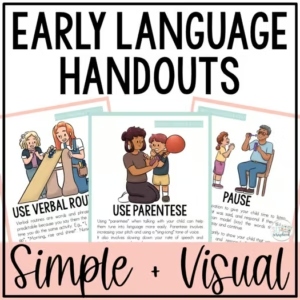
In early intervention, verbal routines are a simple yet powerful tool for supporting early language skills through everyday interactions. Verbal routines are predictable words or phrases that are repeated in the same way, during the same activity, over time. Think of familiar sequences like “1, 2, 3… go!”, “ready, set, go,” or well-loved nursery rhymes. Because they are consistent and repetitive, children begin to anticipate what comes next; creating natural opportunities for participation and communication.
One of the strengths of verbal routines is their flexibility. Almost any activity can become a routine: washing hands, building with blocks, snack time, or getting dressed. This makes them ideal for routine-based intervention, where learning is embedded into daily activities rather than isolated drills. Within these moments, therapists can model language, pause expectantly, and support caregivers in recognizing and responding to communication attempts; key components of effective caregiver-coaching.
In play-based therapy, verbal routines add structure without limiting creativity. A simple phrase repeated during a favorite game can help children engage, take turns, and begin to use words or gestures with increasing independence. Over time, these predictable interactions support comprehension, expressive language, and social communication.
By integrating verbal routines into everyday play and caregiving moments, speech-language therapists can create meaningful, repeatable opportunities for children to build early language skills; all within the context of natural, enjoyable interactions.
References
Roberts, M. Y., & Kaiser, A. P. (2011). The effectiveness of parent-implemented language interventions: A meta-analysis. American Journal of Speech-Language Pathology, 20(3), 180–199.
Kaiser, A. P., & Roberts, M. Y. (2013). Parent-implemented enhanced milieu teaching with preschool children who have intellectual disabilities. Journal of Speech, Language, and Hearing Research, 56(1), 295–309.
In early intervention, verbal routines are more than just repetitive phrases—they create structured, meaningful opportunities for children to engage and communicate within everyday interactions.
First, verbal routines support active participation. Because the language is predictable, children can join in using sounds, words, or gestures, even if they are not yet using full words. This makes them especially effective in play-based therapy, where engagement is key.
They also provide a natural context for building receptive language. When the same words are consistently paired with the same actions (e.g., “go!” as a car rolls), children begin to understand language through repeated, meaningful associations—an essential component of early language skills.
In addition, verbal routines naturally encourage turn-taking. The predictable sequence creates built-in pauses, allowing therapists and caregivers to model waiting, responding, and shared interaction; skills that are foundational for communication.
Finally, predictability reduces cognitive load. When children know what to expect, they can focus less on processing new information and more on participating. This is particularly valuable in routine-based intervention and supports effective caregiver-coaching, as caregivers can easily embed these strategies into daily activities.
References
Roberts, M. Y., & Kaiser, A. P. (2011). The effectiveness of parent-implemented language interventions: A meta-analysis. American Journal of Speech-Language Pathology, 20(3), 180–199.
Kaiser, A. P., & Roberts, M. Y. (2013). Parent-implemented enhanced milieu teaching with preschool children who have intellectual disabilities. Journal of Speech, Language, and Hearing Research, 56(1), 295–309.
Perfect if you want something simple you can use straight away.
The #1 Early Intervention Resource for Verbal Routines and Language Strategies
Using Verbal Routines in Play and Daily Activities
Verbal routines can be easily embedded into both play and everyday moments, making them a natural fit for routine-based intervention and caregiver-coaching.
In Play
Play offers rich opportunities for repetition, engagement, and shared attention—ideal conditions for building early language skills.
Movement play (e.g., cars, balls, chase): Use simple, predictable phrases like “Ready… set… go!” and pause before “go” to encourage participation.
Bubbles or sensory play: Try a routine like “Open… dip… blow!” and repeat it each time to build anticipation and engagement.
In Daily Routines
Everyday activities provide consistent, meaningful contexts where verbal routines can be repeated frequently.
Handwashing or caregiving routines: Use phrases like “Wash, wash, wash… all clean!” to pair language with action.
Transitions (e.g., stairs, bedtime): Simple, repetitive phrases such as “Up, up, up the stairs” or “Night night, love you” help children anticipate and participate in routines.
Ready to feel confident in your Early Intervention sessions?
Join my email list for weekly tips and ideas for Early Intervention, plus get access to my freebie library full of materials to support your practice.
You’ll get practical strategies you can use in your sessions, evidence-based approaches explained clearly, and resources that make your job easier – not harder.
We use cookies on our website to give you the most relevant experience by remembering your preferences and repeat visits. By clicking “Accept”, you consent to the use of ALL the cookies.
This website uses cookies to improve your experience while you navigate through the website. Out of these, the cookies that are categorized as necessary are stored on your browser as they are essential for the working of basic functionalities of the website. We also use third-party cookies that help us analyze and understand how you use this website. These cookies will be stored in your browser only with your consent. You also have the option to opt-out of these cookies. But opting out of some of these cookies may affect your browsing experience.
Necessary cookies are absolutely essential for the website to function properly. These cookies ensure basic functionalities and security features of the website, anonymously.
Cookie
Duration
Description
cookielawinfo-checbox-analytics
11 months
This cookie is set by GDPR Cookie Consent plugin. The cookie is used to store the user consent for the cookies in the category "Analytics".
cookielawinfo-checbox-functional
11 months
The cookie is set by GDPR cookie consent to record the user consent for the cookies in the category "Functional".
cookielawinfo-checbox-others
11 months
This cookie is set by GDPR Cookie Consent plugin. The cookie is used to store the user consent for the cookies in the category "Other.
cookielawinfo-checkbox-necessary
11 months
This cookie is set by GDPR Cookie Consent plugin. The cookies is used to store the user consent for the cookies in the category "Necessary".
cookielawinfo-checkbox-performance
11 months
This cookie is set by GDPR Cookie Consent plugin. The cookie is used to store the user consent for the cookies in the category "Performance".
viewed_cookie_policy
11 months
The cookie is set by the GDPR Cookie Consent plugin and is used to store whether or not user has consented to the use of cookies. It does not store any personal data.
Functional cookies help to perform certain functionalities like sharing the content of the website on social media platforms, collect feedbacks, and other third-party features.
Performance cookies are used to understand and analyze the key performance indexes of the website which helps in delivering a better user experience for the visitors.
Analytical cookies are used to understand how visitors interact with the website. These cookies help provide information on metrics the number of visitors, bounce rate, traffic source, etc.
Advertisement cookies are used to provide visitors with relevant ads and marketing campaigns. These cookies track visitors across websites and collect information to provide customized ads.