Gestures Parent Handouts for Early Intervention
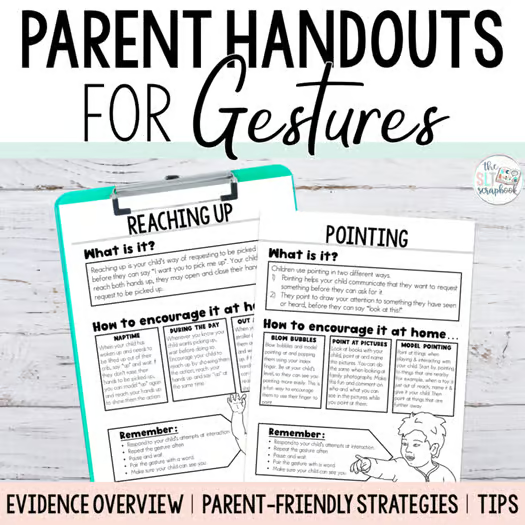
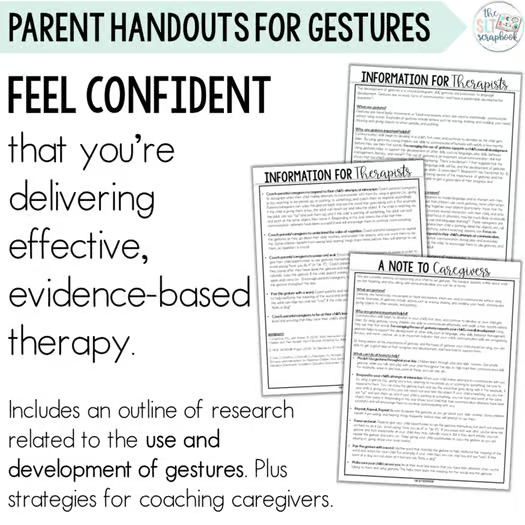
Support early communication and gesture development with these practical Gestures Parent Handouts for Early Intervention. Designed for Speech and Language Therapists (SLTs/SLPs), this resource provides caregiver-friendly information and simple, achievable strategies to help families encourage gestures through everyday play, routines, and interactions.
Gestures are an important part of early communication development. Before children begin using spoken words consistently, they may communicate through actions such as reaching, showing, giving, waving, and pointing.
These ready-to-use handouts help therapists explain the importance of gestures and demonstrate how caregivers can create natural opportunities for communication at home.
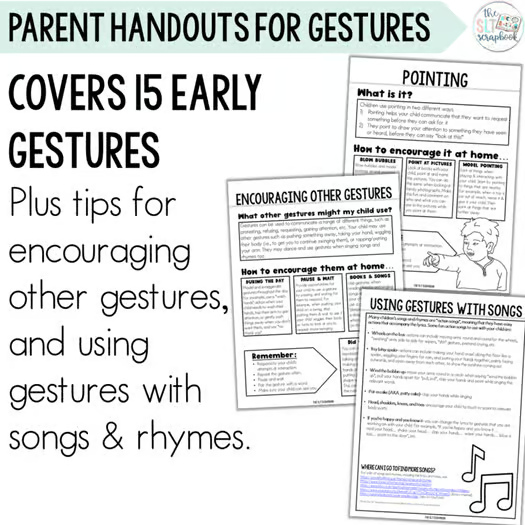
With 15 parent-friendly handouts, detailed therapist information, and a gesture checklist, this resource is ideal for caregiver coaching sessions, home visits, and Early Intervention programmes.
⭐ Why Therapists Love These Gestures Parent Handouts
- Includes 15 practical, caregiver-friendly handouts
- Focuses on individual gestures and early communication skills
- Provides three practical ideas on each gesture handout
- Includes therapist information and a research overview
- Supports family-centred Early Intervention and caregiver coaching
- Encourages communication through play and everyday routines
- Includes a gesture checklist to support monitoring and discussion
- Helps reduce preparation time for therapists
- Suitable for home visits, clinic sessions, and parent consultations
- Easy to select and share handouts based on individual communication goals
⭐ What’s Included?
Detailed Therapist Information
The resource includes information for therapists covering:
- The role of gestures in early communication development
- Research relating to gesture development
- Supporting gesture use during Early Intervention
- Coaching parents and caregivers to encourage communication at home
- Practical considerations for using the handouts during therapy
This information can help therapists plan sessions and explain the importance of early gestures to families.
15 Parent-Friendly Gesture Handouts
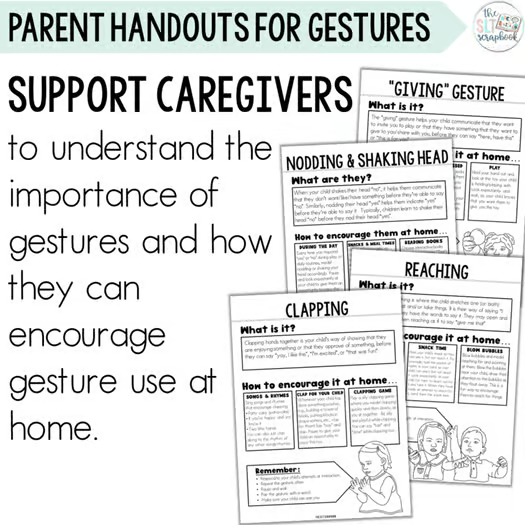
Each handout includes an explanation of the gesture or gesture-related activity, alongside three practical ideas for encouraging its use during everyday interactions.
The handouts cover:
- Giving
- Nodding and shaking the head
- Showing
- Reaching for objects
- Reaching up
- Waving
- Pointing
- Clapping
- Blowing a kiss
- “Shh”
- High five and thumbs up
- “Stinky” wave
- Shrugging
- Encouraging other gestures
- Encouraging gestures through songs and rhymes
The ideas are designed to be accessible to caregivers and adaptable to their child’s interests, abilities, and everyday experiences.
Gesture Checklist
A printable gesture checklist is also included to help therapists and caregivers:
- Record gestures a child is using
- Identify gestures to explore during intervention
- Discuss changes in communication over time
- Support collaborative planning and goal setting
- Share observations between therapy sessions
The checklist is intended as an informal monitoring and discussion tool rather than a standardised assessment.
⭐ Why Are Gestures Important for Early Communication?
Gestures are a meaningful form of communication and play an important role in early language development.
Young children may use gestures to request objects, share interests, gain attention, greet others, reject something, or participate in familiar social routines.
Gesture development is associated with later language development, and gestures can provide valuable information about a child’s emerging communication skills.
Supporting gestures during Early Intervention can help children communicate meaningfully while therapists and caregivers continue to support spoken language and other appropriate communication methods.
Importantly, gestures do not need to be viewed simply as a stepping stone to speech. They are valuable communication behaviours in their own right.
Gestures can also be supported alongside other early language strategies, such as modelling, commenting, following the child’s lead, and creating natural opportunities for communication.
Explore our Early Language Strategies guide to learn more about supporting communication development through everyday interactions.
[Add internal link to Early Language Strategies pillar page]
⭐ Designed for Caregiver Coaching
These Gestures Parent Handouts are designed to help therapists translate knowledge about early communication into practical strategies families can use.
They can be incorporated into caregiver coaching sessions to:
- Explain the purpose and function of different gestures
- Model ways to encourage gestures during play
- Identify natural communication opportunities within daily routines
- Jointly plan activities that match family priorities
- Provide caregivers with practical ideas between sessions
- Reflect on the child’s communication and progress
- Support carryover into everyday family life
Rather than asking caregivers to complete lengthy structured activities, the handouts encourage them to incorporate communication opportunities into familiar interactions.
For more information about supporting families to use communication strategies, explore our Caregiver Coaching resources and guidance.
[Add internal link to Caregiver Coaching pillar page]
⭐ Flexible and Child-Led
Every child’s communication development is different, and not all gestures will be appropriate or accessible for every child.
The ideas within this resource can be adapted according to each child’s interests, developmental profile, motor abilities, sensory preferences, and communication needs.
Caregivers can model gestures naturally without requiring a child to imitate or perform them on demand.
The aim is to create enjoyable, meaningful opportunities for communication rather than placing pressure on children to demonstrate specific skills.
⭐ Perfect for:
- Early Intervention Speech Therapy
- Speech and Language Therapists (SLTs)
- Speech-Language Pathologists (SLPs)
- Caregiver coaching and parent consultations
- Home visits
- Toddlers and young children developing early communication skills
- Prelinguistic communication intervention
- Play-based therapy
- Family-centred intervention
- Home practice and carryover
- Supporting early gesture development
⭐ Practical, Ready-to-Use and Time-Saving
These handouts are designed to reduce the time therapists spend preparing caregiver information.
Simply select the handout relevant to the child’s current communication skills, use it to guide discussion and modelling during the session, and provide a copy for the family to refer to at home.
The gesture checklist can be used alongside the handouts to support ongoing discussions about communication development and individual goals.
Whether you’re introducing gestures to caregivers for the first time or building on existing communication skills, this resource provides a practical starting point for intervention planning.
⭐ Looking for More Early Communication Resources?
If you’re supporting children who are developing gestures, imitation, and early communication skills, you may also be interested in these complementary resources.
Imitating Actions – Prelinguistic Skills for Early Intervention
Help children develop early imitation skills through engaging, play-based activities targeting actions and body movements.
This resource complements the Gestures Parent Handouts by providing additional opportunities to explore imitation during play.
Early Communication Activities – Symbolic Sounds & Early Gestures
Looking for practical play materials to use alongside your caregiver coaching handouts?
Our Early Communication Activities resource includes printable play materials, symbolic sound and gesture ideas, and activity suggestions that can be adapted to support early communication during therapy sessions.
Together, these resources provide different ways to support early communication through caregiver education, modelling, and play-based interactions.
⭐ Additional Information
This resource was created by a qualified and certified paediatric Speech and Language Therapist based in the UK.
The information, strategies, and activities included within this resource are based on current knowledge, evidence-informed practice, and clinical experience at the time of writing. While every effort has been made to ensure the content is accurate and up to date, research and best practice recommendations continue to evolve over time.
This resource is intended to provide practical ideas and support for therapists, educators, and caregivers. It is not intended to replace direct Speech and Language Therapy assessment, intervention, diagnosis, or professional advice.
Practitioners should always use their professional judgement when selecting, adapting, and implementing activities to meet the individual needs of the children they support. Not all strategies or activities will be suitable for every child or setting.
This resource may be reviewed and updated periodically to reflect new evidence, feedback, and best practice recommendations.
Additional Product Information
- Digital download only
- 15 caregiver-friendly gesture handouts
- Therapist information and research overview
- Printable gesture checklist
- Suitable for Early Intervention and caregiver coaching
- No physical product will be shipped
Help families understand and encourage early gestures with practical, accessible handouts that support meaningful communication through everyday interactions.

Reviews
There are no reviews yet.