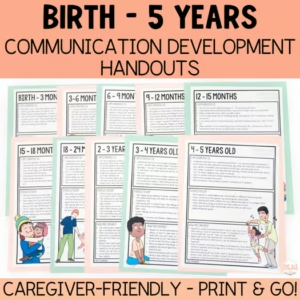
Early Intervention Handouts for Speech Therapy
Support meaningful progress beyond your sessions
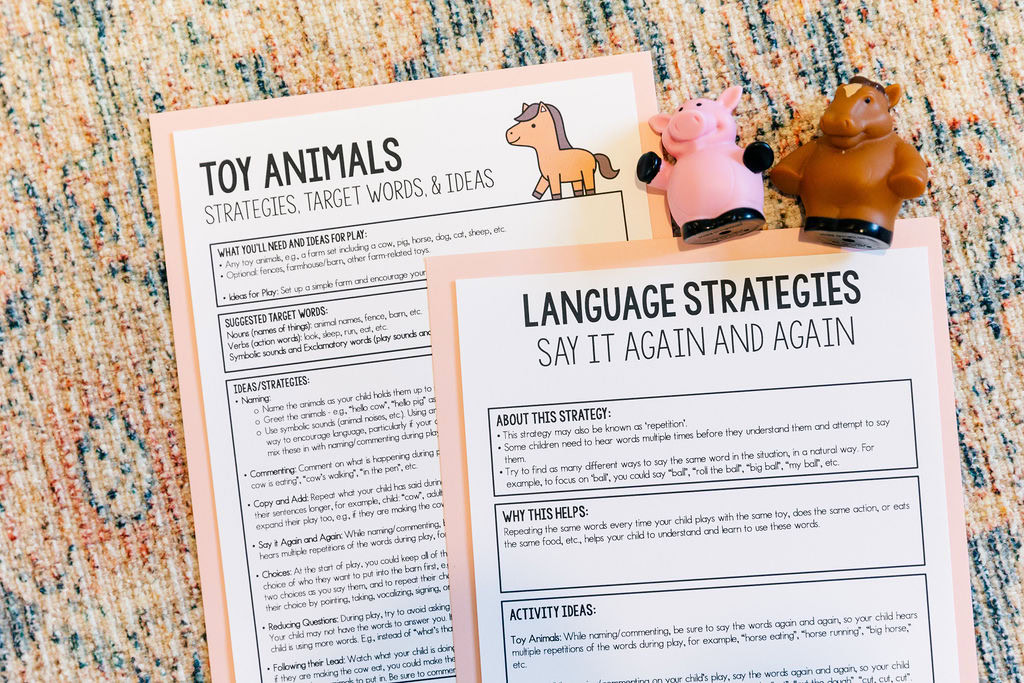
Early Intervention handouts are a practical tool used in Speech and Language Therapy to support caregiver understanding and involvement beyond sessions. They provide clear, accessible explanations of strategies, helping families understand how to support communication development within everyday routines and interactions.
When used as part of caregiver coaching, these handouts can support consistency between sessions and home, reinforce key strategies, and give caregivers something to refer back to. This is particularly important when working with late talkers or young children developing early communication skills, where progress is often built through small, repeated interactions over time.
What are Early Language Handouts, and why do we use them?
Note: External links are included for your convenience and reference; we are not responsible for the content or accuracy of third-party websites.
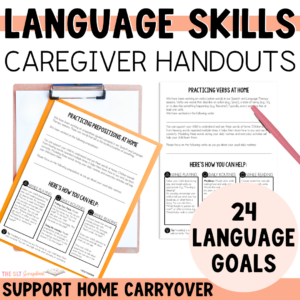
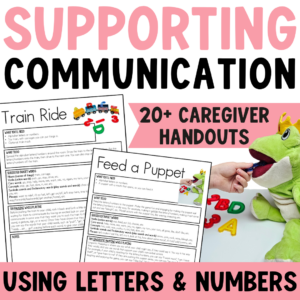
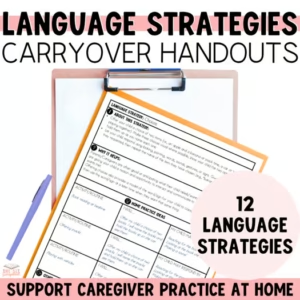
Early intervention handouts are structured, caregiver-friendly resources used in speech and language therapy to explain key concepts, strategies, and approaches in a clear and accessible way. They are designed to support understanding and provide practical guidance that caregivers can refer back to between sessions.
Handouts play a key role in effective early intervention, particularly within a caregiver coaching approach. Research shows that when caregivers are supported to use language strategies in everyday interactions, children’s communication and language skills improve significantly. (Source: American Journal of Speech Language Pathology). This is because progress is not limited to therapy sessions, but is built through repeated, meaningful interactions at home.
Providing clear, well-designed handouts helps caregivers understand what to do, why it matters, and how to apply strategies in real-life situations. Rather than relying on memory or brief explanations, families have consistent information they can revisit, reflect on, and use over time.
Early Intervention itself is also associated with improved outcomes, particularly when support is introduced early and embedded into daily routines. (Source: National Library of Medicine). Handouts can help make this possible by supporting consistency and carryover between sessions.
Overall, Early Intervention handouts support a collaborative, family-centred approach, where caregivers are actively involved in their child’s communication development.

Did You Know?
Providing handouts for caregivers to refer back to after the session can serve as a helpful reminder of how to implement a strategy (O’Toole et al., 2021).
Top Tip for Using Handouts in your Early Intervention Sessions:
Encourage caregivers to put handouts where they’ll sse them:
Typically, handouts are stuck on the fridge or a noticeboard in the kitchen. But these can easily be covered and forgotten. Instead, encourage caregivers to put the handouts in the places they’ll use them.
For example, if you are working on offering choices while getting dressed, put the handout on the wardrobe/closet door. If they’re working on pausing while reading books, put the handout on the bookshelf.
Doing so helps them serve as a visual reminder to use the strategy, and it means the handout is within reach if they need to refresh their memory of what to do while doing the activity.
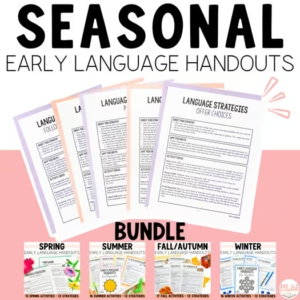
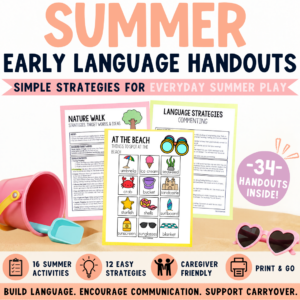
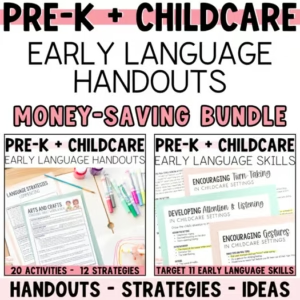
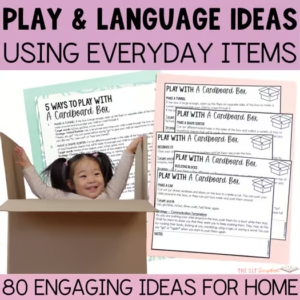
Handouts to Support Early Intervention for Speech Therapy
Explore related topics
Ready to feel confident in your Early Intervention sessions?
Join my email list for weekly tips and ideas for Early Intervention, plus get access to my freebie library full of materials to support your practice.
You’ll get practical strategies you can use in your sessions, evidence-based approaches explained clearly, and resources that make your job easier – not harder.