
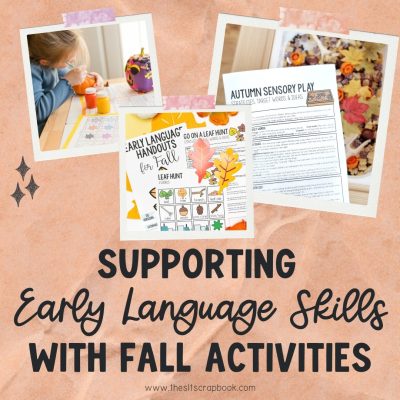
Autumn is my favourite season, not only because the leaves change colours and the air gets crisper, but it’s also the perfect time to support caregivers to engage in fun and seasonal activities with their little ones! In this blog post you’ll learn 5 engaging fall activities for supporting early language skills, and learn 5 language facilitation strategies you can coach caregivers to use when they do these fall activities too.
5 of my Favourite Fall Activities for Supporting Early Language Skills
Fall/autumn is an excellent time for getting out and about with little ones. These are my favourite fall-time activities for families to encourage early language skills…
- Visit a Pumpkin Patch- There’s so much to talk about when visiting a pumpkin patch- tonnes of describing words when talking about the different pumpkins, verbs, core words, and so much more. Check out this blog post for some ideas for how you can use pumpkins to support early language skills.
- Go on a Leaf Hunt- Little kids love to explore and collect things. I love going outside with families (either out for a walk or just in the garden) and looking for leaves together. We can encourage so much language and communication when on a leaf hunt. We can model nouns, verbs, core words, and even symbolic sounds and exclamatory words!
- Collect Fall Treasures (AKA. Autumn Treasures)- As well as leaves, you can find things like conkers (AKA. buckeyes), acorns, leaves, seeds, twigs, pine cones, chestnuts, and more when out and about with little ones. I like to encourage caregivers to go on a nature walk with their child in their local area and collect the different things they see while out and about (as I say, little kids are naturally curious and they love collecting things like this. Plus, a nature walk is a language-rich activity in itself!). I often share these handouts with families, as they have ideas for different activities they can do at home with their fall treasures to support their child’s language skills. Bonus- collecting fall treasures and nature walks are completely free but very language-rich experiences for families!
- Singing Fall-Themed Songs and Rhymes- Singing songs and rhymes is a great way to encourage early language skills. Some of my favourite autumn-themed songs are Five Little Leaves, Dingle Dangle Scarecrow, Five Little Pumpkins, Big Red Combine Harvester, and I’m a Little Scarecrow. Check out this blog post for more info about singing songs and rhymes with young children.
- Fall Sensory Play- Sensory play can be as simple or elaborate as you/the caregivers like. You can set up a fall-themed sensory bin, use orange play dough and fall-themed cutters, play with a pumpkin, or play with conkers in water.
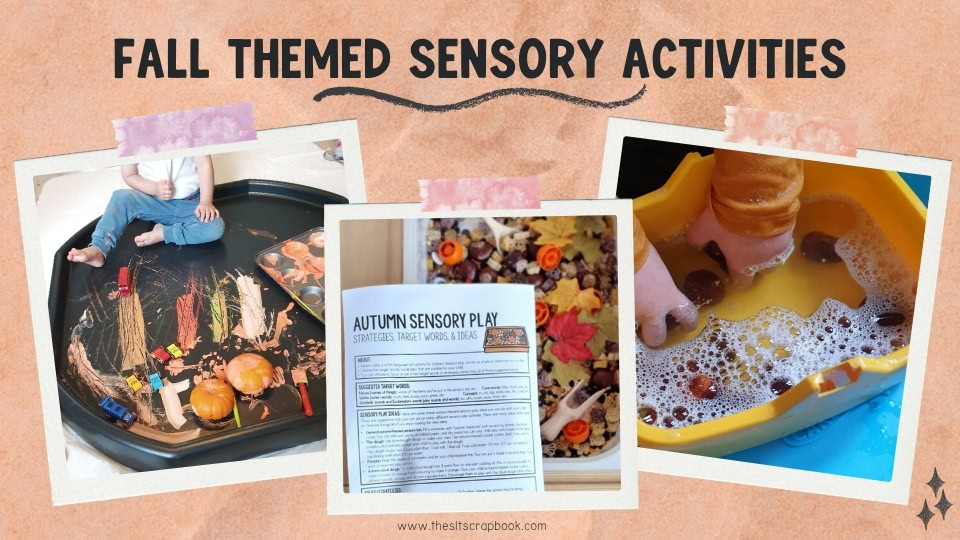
Supporting Early Language Skills with Fall Activities- Words to Model
You can model many words during these fun fall activities. But as with every activity, it’s essential to choose target words and vocabulary that are most suitable for each child’s developmental stage. Check out this blog post for tips for choosing target words.
Here’s a simple tip to share with caregivers: focus on just a few target words during the activity. If suitable, choose different types of words to help develop their vocabulary beyond just nouns.
Here are some suggested target words to get you started:
- Nouns (names of things): leaf/leaves, seed, twig, acorn, etc.
- Core words: help, more, see, want, yes, no, etc.
- Verbs (action words): look, find, pick up, get, carry, hold, etc.
- Symbolic sounds and exclamatory words: oo, ahh, yay, wow, yuk, etc.
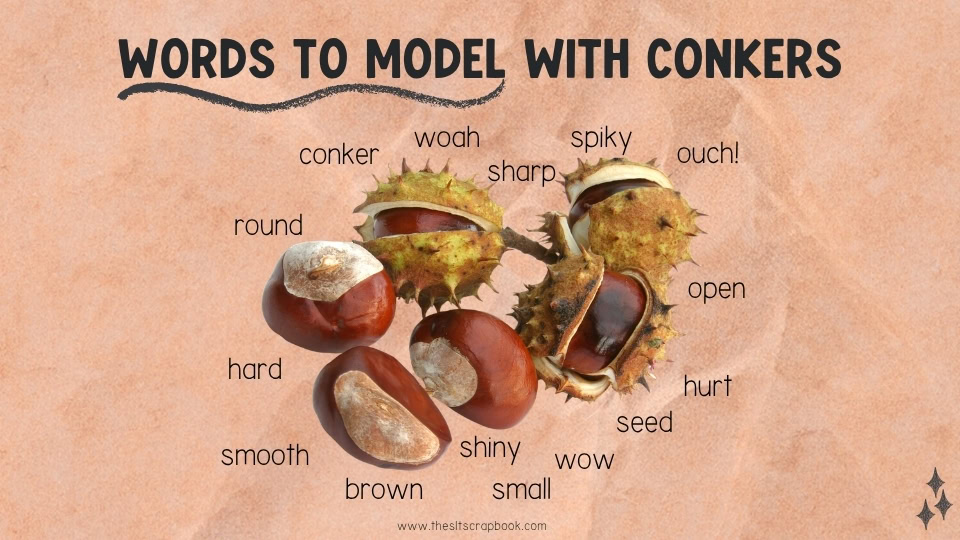
Here’s an example of words you could model when playing with conkers and autumn treasures:
5 Language Facilitation Strategies to Support Early Language Skills
There are many different language facilitation strategies you can coach caregivers to use when they do with fall activities with their child. Here are some examples:
- Naming/Modelling: Name the things the child is looking at/holding/doing, e.g., “a leaf”, “acorn”, etc.
- Commenting: Talk about what you/the child are doing and what is happening, what you can see, etc. Use simple words and phrases, for example, “a pine cone”, “I have a leaf”, etc.
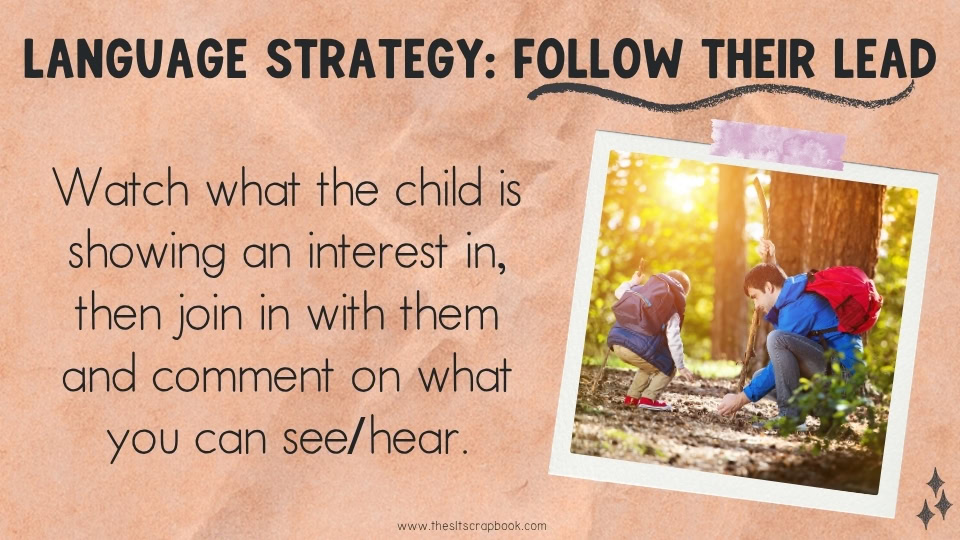
- Following their Lead: Watch what the child is showing an interest in and comment on this. If you can, let them decide what they want to do next and when they want to move on. I.e., if they want to keep searching for acorns, join in with them and comment on what is happening.
- Copy and Add: Repeat what the child has said and add another word so they hear how to make their sentences longer. For example, child: “stick”, adult: “big stick”. If your child uses two words, you add a third, etc.
- Use Gestures: Use gestures to accompany comments, for example, put your arms wide apart to show “big”. Encourage the child to point to, or reach for, the leaves they want/can see. Say the words as you make the gesture, and respond to any gestures that your child uses.
If you want a set of caregiver-friendly handouts for fall activities, with play ideas, target words, and language strategies, all ready to print & go, check out the Fall Early Language Handouts available from my TPT store here, and my website store here.
Autumn is a wonderful season for nurturing language and communication skills in young children. These simple activities can turn into language-rich, learning-filled experiences. Remember, these suggestions are just a starting point, and you can adapt them to suit each child and family’s individual needs and interests.
Want more autumnal ideas? Check out this blog post for 5 ways you can use pumpkins to support early language skills too.
What are your favourite fall activities to do in your EI sessions? Let me know in the comments!